★ REP YOUR TOWN ★ HOMETOWN GEAR ★ PRINTED TO ORDER ★ WHERE YOU FROM? ★ REP YOUR TOWN ★ HOMETOWN GEAR ★ PRINTED TO ORDER ★ WHERE YOU FROM? ★ REP YOUR TOWN ★ HOMETOWN GEAR ★ PRINTED TO ORDER ★ WHERE YOU FROM? ★ REP YOUR TOWN ★ HOMETOWN GEAR ★ PRINTED TO ORDER ★ WHERE YOU FROM? ★ REP YOUR TOWN ★ HOMETOWN GEAR ★ PRINTED TO ORDER ★ WHERE YOU FROM? ★ REP YOUR TOWN ★ HOMETOWN GEAR ★ PRINTED TO ORDER ★ WHERE YOU FROM?
Clean navy line art of the Rutherford County Courthouse on the square, the 1859 building with its columns and cupola, with MURFREESBORO set wide underneath. One-color print that works on any shirt.
Heavyweight 100% cotton
Classic unisex fit
What's on this shirt
Clean navy line art of the Rutherford County Courthouse on the square, the 1859 building with its columns and cupola, with MURFREESBORO set wide underneath.
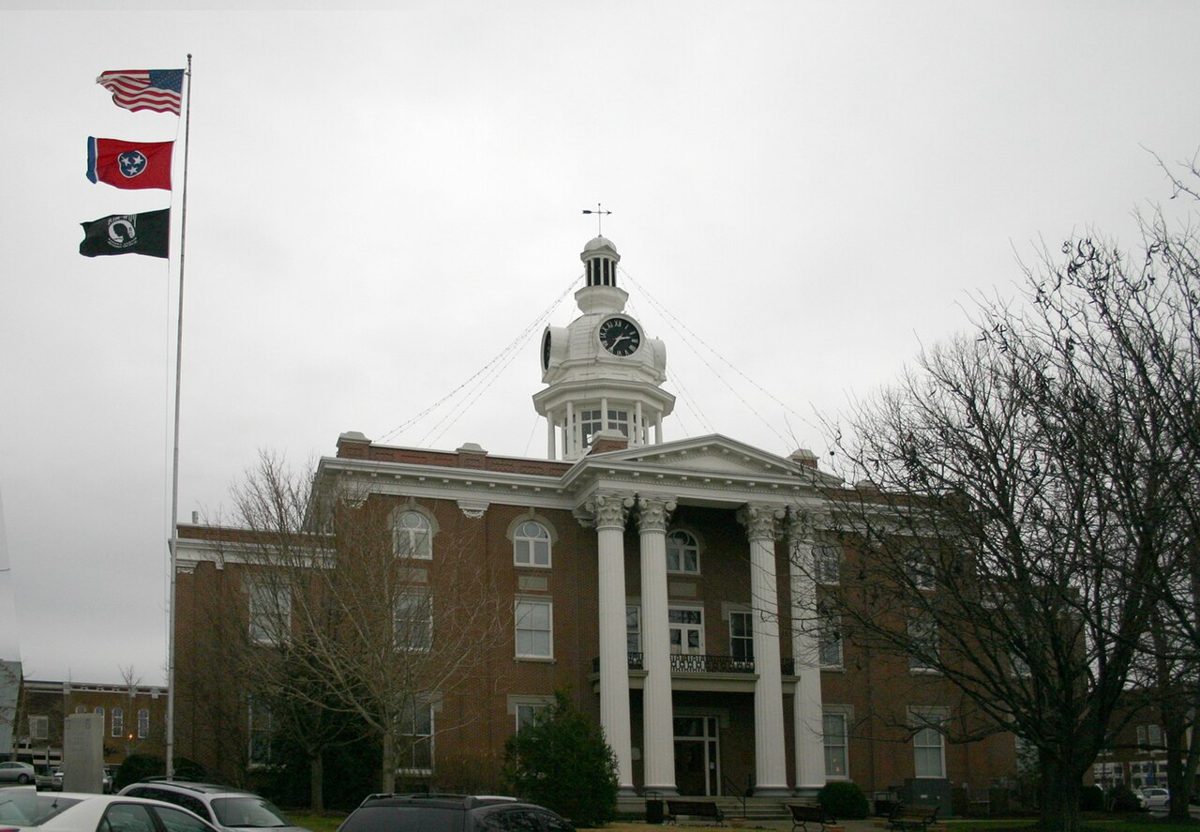
The courthouse is a square brick building with a four-column portico and pediment, topped by a tall two-stage cupola with a round clock, an octagonal top and a small dome. It stands on the Public Square, the same ground William Lytle set aside for the town back when it was first laid out.
The Rutherford County Courthouse on the Public Square in Murfreesboro, Tennessee. Photo: Pollinator at en.wikipedia, CC BY-SA 3.0, via Wikimedia Commons.
Gift idea: For anyone who knows the courthouse clock tower like the back of their hand.
Questions about this shirt
What building is this?
It is the Rutherford County Courthouse, built in 1859, on the Public Square in downtown Murfreesboro.
Is the drawing an exact copy of the courthouse?
It is a simplified, stylized line drawing of the courthouse, not an architectural rendering.
What sizes and colors does it come in?
Sizes S to 3XL in 12 colors: Navy, Natural, Sand, White, Sport Grey, Ash, Light Blue, Black, Forest Green, Maroon, Military Green, Charcoal. Every size is $29.
How is it made?
Heavyweight 100% cotton, classic unisex fit. Each shirt is printed to order in the USA when you buy it.
Can I return or exchange it?
Each shirt is printed to order, so we can't take returns or exchanges for size or a change of mind. If it arrives misprinted or damaged, tell us within 30 days with a photo and we'll replace or refund it, free. Check the size chart above before you order.
A little Murfreesboro history
Murfreesboro started out as a settlement at the confluence of Town and Lytle creeks, land given by Colonel William Lytle for a Public Square, a cemetery, and the First Presbyterian Church. The spot was first named Cannonsburgh after politician Newton Cannon, but about thirty days later Lytle had it renamed Murfreesborough in honor of his Revolutionary War friend Colonel Hardy Murfree. By early 1812 the name had shortened to Murfreesboro.
The Tennessee legislature chartered the town in 1811 and made it the seat of Rutherford County, and the first courthouse, finished in 1813, actually served as the capitol of Tennessee from 1818 to 1826. Murfreesboro almost became the state's permanent capital in the 1840s, but local officials balked at paying the one hundred dollars it would have cost to move the state records from Nashville.
The Civil War left a deep mark here. For three days in the winter of 1862 and 1863, 81,000 Union and Confederate troops clashed at the Battle of Stones River, one of the war's largest and most important engagements, and that battlefield is still a huge part of how Murfreesboro sees itself today.