★ REP YOUR TOWN ★ HOMETOWN GEAR ★ PRINTED TO ORDER ★ WHERE YOU FROM? ★ REP YOUR TOWN ★ HOMETOWN GEAR ★ PRINTED TO ORDER ★ WHERE YOU FROM? ★ REP YOUR TOWN ★ HOMETOWN GEAR ★ PRINTED TO ORDER ★ WHERE YOU FROM? ★ REP YOUR TOWN ★ HOMETOWN GEAR ★ PRINTED TO ORDER ★ WHERE YOU FROM? ★ REP YOUR TOWN ★ HOMETOWN GEAR ★ PRINTED TO ORDER ★ WHERE YOU FROM? ★ REP YOUR TOWN ★ HOMETOWN GEAR ★ PRINTED TO ORDER ★ WHERE YOU FROM?
Old-school engraved artwork in burnt orange: the sun coming up over the mountains, downtown storefronts and the railroad tracks, Johnson City arched across the top and est. 1869 underneath. Printed to order in the USA.
Heavyweight 100% cotton
Classic unisex fit
What's on this shirt
Old-school engraved artwork in burnt orange: the sun coming up over the mountains, downtown storefronts and the railroad tracks, JOHNSON CITY arched across the top with TENNESSEE · EST. 1869 underneath.
1869 is when it started. Henry Johnson had already built a store, depot and post office here in 1854 along the East Tennessee and Virginia Railroad, and after going by names like Johnson's Tank and Johnson's Depot, the settlement got its state charter as Johnson City on December 1, 1869, with Henry Johnson as its first mayor.
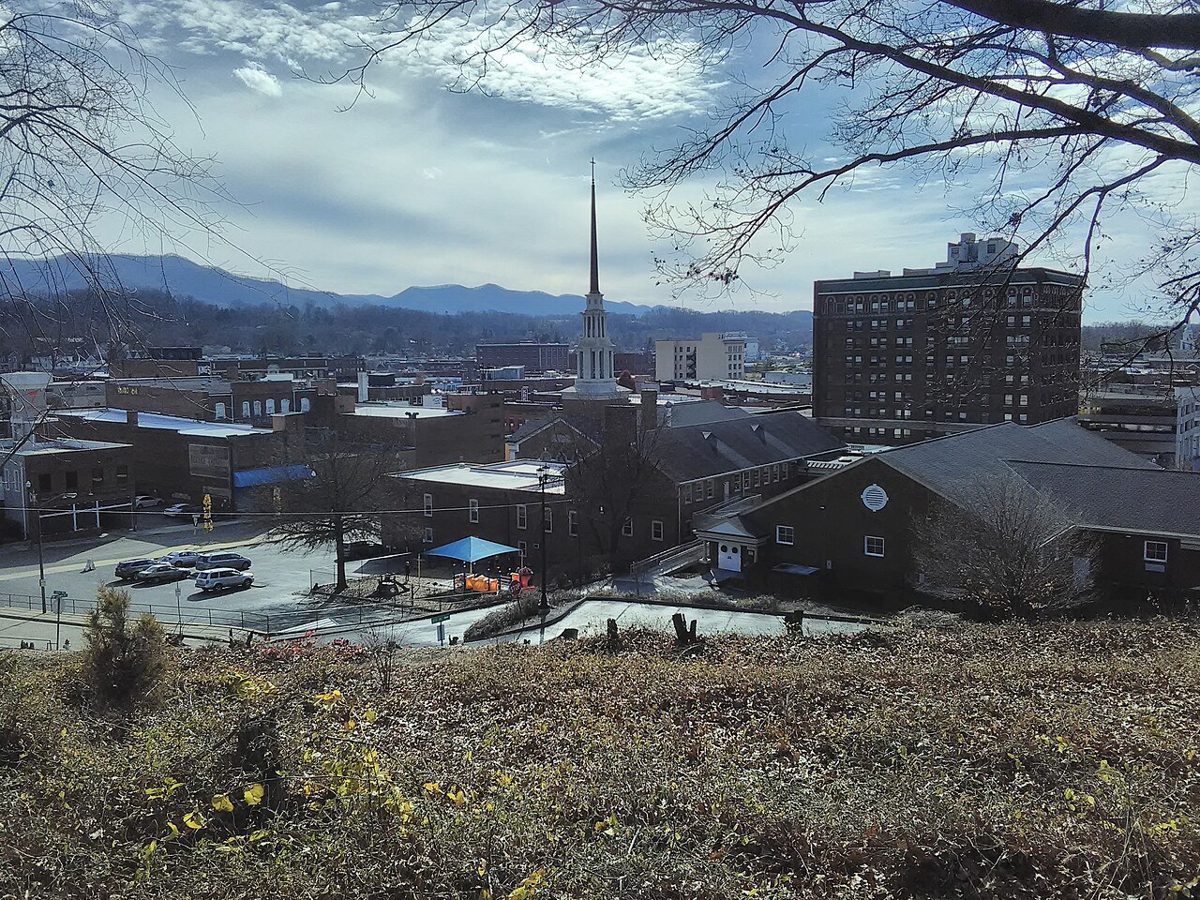
Johnson City seen from a hillside above town. Photo: Lfazz, CC BY-SA 4.0, via Wikimedia Commons.
Gift idea: A good pick for the history buff, or anyone whose family has been in Johnson City for generations.
Questions about this shirt
Why does it say est. 1869?
Johnson City got its state charter on December 1, 1869, with Henry Johnson serving as its first mayor.
Why is it called Johnson City?
It is named for Henry Johnson, who built a store, depot and post office on the site in 1854.
What sizes and colors does it come in?
Sizes S to 3XL in 12 colors: Black, Natural, Sand, White, Sport Grey, Ash, Light Blue, Navy, Forest Green, Maroon, Military Green, Charcoal. Every size is $29.
How is it made?
Heavyweight 100% cotton, classic unisex fit. Each shirt is printed to order in the USA when you buy it.
Can I return or exchange it?
Each shirt is printed to order, so we can't take returns or exchanges for size or a change of mind. If it arrives misprinted or damaged, tell us within 30 days with a photo and we'll replace or refund it, free. Check the size chart above before you order.
A little Johnson City history
Henry Johnson built a store, depot, and post office here in 1854, right where the East Tennessee and Virginia Railroad was coming through. The settlement went by a few names over the years, Johnson's Tank, Johnson's Depot, even Haynesville during the Civil War, before it got a state charter as Johnson City on December 1, 1869, with Henry Johnson as its first mayor.
The railroads made the town. Three rail lines crossed downtown, and Johnson City became headquarters for the narrow gauge ET&WNC, nicknamed Tweetsie, and the Clinchfield Railroad. That boom period, with a few bumps like the Panic of 1893, built the city's industrial base and brought steady growth through the early 1900s.
During Prohibition the city picked up the nickname Little Chicago because of its ties to bootlegging, and Al Capone is rumored to have had operations here. Johnson City also had its own 1928 recording sessions, the Johnson City Sessions, which produced artists like Fiddlin Charlie Bowman and Clarence Tom Ashley, putting the city in the same conversation as the more famous Bristol Sessions.